Precision Fuel Gas Piping Safety for Northeast Queens Homes
Natural gas fuels the central heating boilers, hot water heaters, clothes dryers, and kitchen ranges of most residences in Douglaston and Little Neck. Because natural gas is volatile and odorless in its natural state, mercaptan is added by utilities to create a distinct sulfur odor. Gas distribution piping—traditionally constructed of heavy black malleable iron with threaded fittings—must maintain an absolute, hermetic pressure seal.
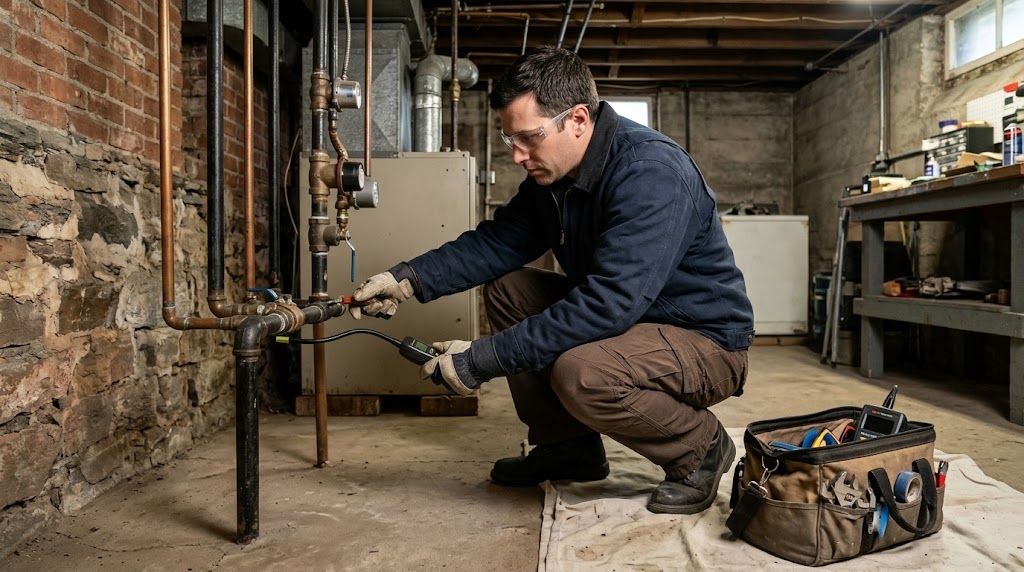
Over decades of cellar exposure, moisture, mechanical vibration, and shifting building loads, threaded pipe joints can weep tiny amounts of gas. Under NYC Building Code regulations, all gas piping alterations, pressure testing, and appliance hookups must strictly be performed by licensed professionals. Our technicians utilize high-precision combustible gas sniffers and certified pressure decay gauges to verify absolute gas line integrity.
Mandatory Life Safety Notice: Active Gas Leaks
If you smell the pungent odor of natural gas, hear a hissing noise near gas lines, or suspect an active gas leak, evacuate the premises immediately. Do not flip electrical light switches, use phones, or ring doorbells. Once safely outdoors at a distance, call 911 or National Grid (1-718-643-4050) immediately before calling our office.
NYC Local Law 152: Periodic Gas Piping Inspections
Enacted by the New York City Department of Buildings, Local Law 152 mandates periodic safety inspections of exposed gas piping systems in all buildings across NYC, excluding standalone one- and two-family residences (classified as R-3 occupancy). For multi-family properties, co-ops, condominiums, and mixed-use commercial buildings in Queens Community District 11 (which encompasses Douglaston, Little Neck, and Bayside), compliance cycles must be certified once every four years by a Licensed Master Plumber.
Our comprehensive inspection verifies that exposed gas piping from the building entrance to tenant spaces is free from heavy corrosion, improper non-code fittings, unlawful branch taps, or gas leakage.
Our Gas Piping Diagnostic & Repair Workflow
Systematic, code-compliant testing to isolate leaks and restore safe gas utility service.
Electronic Sniffer & Bubble Solution Leak Pinpointing
We trace fuel runs using calibrated combustible gas sniffers and micro-leak detection fluid to pinpoint pinpoint weeping fittings without guesswork.
High-Resolution Pressure Decay Test
The piping run is isolated from all equipment and pressurized with air or nitrogen using a certified test gauge to prove zero pressure drop over an established timeframe.
Piping Replacement & Ball Valve Installation
Corroded black iron pipe sections are removed and replaced with heavy-duty schedule-40 malleable iron piping and modern full-port quarter-turn brass gas cocks.
DOB Filing & Utility Service Restoration
When service has been locked out by National Grid, we execute necessary DOB filings, coordinate required inspections, and oversee safe meter turn-on.
Fuel Supply for Heating Equipment
Natural gas piping is the lifeline of your home heating system. When upgrading or repairing gas infrastructure, review our dedicated Boiler Repair and Boiler Replacement services to ensure gas supply lines meet equipment input demands, or explore our Water Heater Repair diagnostics.
Gas Line Repair Frequently Asked Questions
Key information regarding gas safety, DOB codes, and pressure testing procedures.
Evacuate the premises immediately without touching light switches, using landlines, or turning on electrical appliances. Once safely outdoors at a distance, dial 911 or call National Grid (1-718-643-4050) immediately. Never search for the gas leak source yourself.
NYC Local Law 152 mandates that gas piping systems in all buildings—excluding standalone one- and two-family homes (R-3 occupancy)—must be inspected by a Licensed Master Plumber once every four years according to a community district schedule established by the NYC Department of Buildings.
Technicians use calibrated combustible gas sniffer sensors and perform an official high-resolution pressure decay test. The piping system is isolated from appliances and pressurized with air or inert nitrogen using a certified test gauge to confirm zero pressure loss over an established test duration.
No. Under the New York City Fuel Gas Code, all gas piping installation, modification, testing, and connection must legally be executed by a Licensed Master Plumber holding the appropriate city certifications.